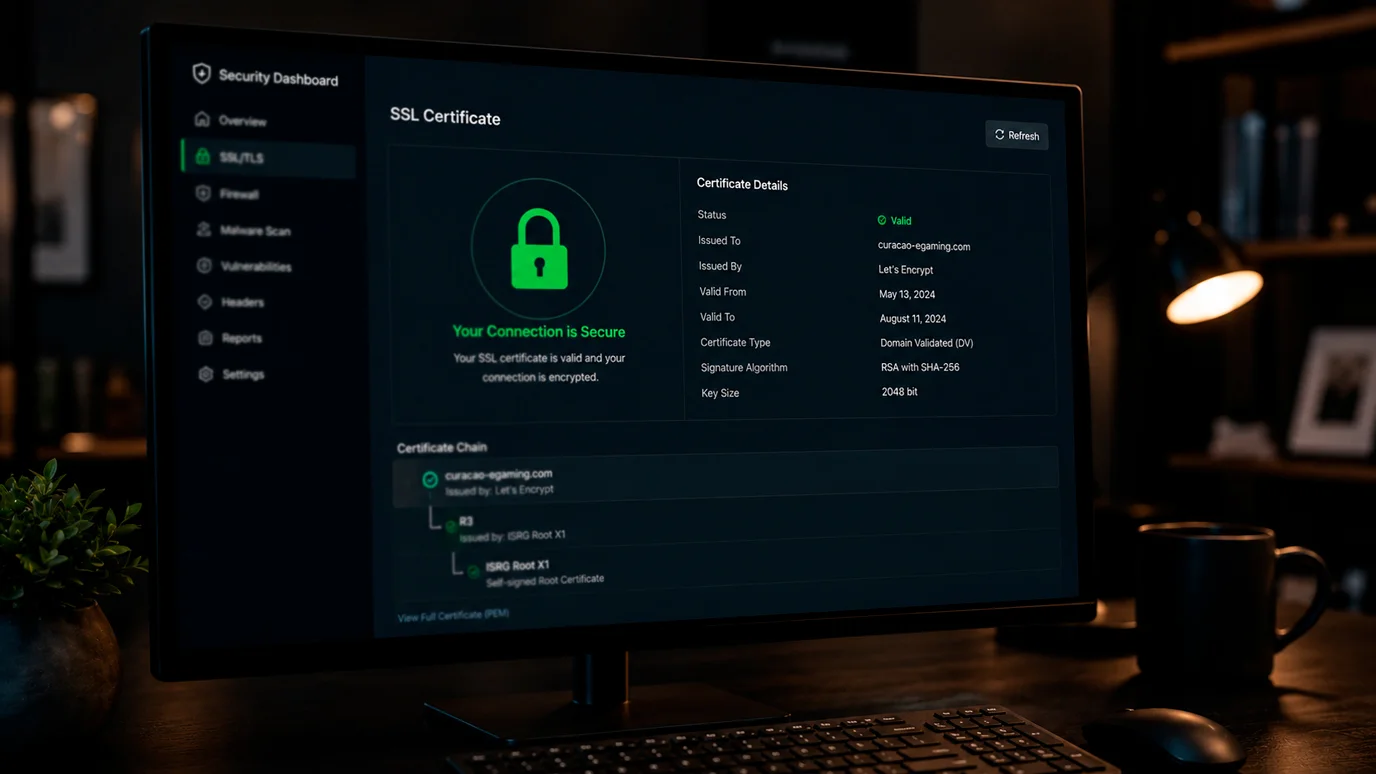
Rollino Casino Expert Review 2026
 Available in GB
Table of Contents
- Rollino Casino Expert Review 2026
- What Nine Years of Casino Analysis Tell Me About Rollino
- Altacore N.V. and the Multi-Brand Operator Model
- Curacao Licence and Regulatory Standing
- Welcome Bonus and Promotions at a Glance
- Game Catalogue: Slots, Live Tables, and Sports Betting
- Payment Methods: Fiat and Cryptocurrency
- Security, Data Protection, and Player Safety
- Mobile Experience and Device Compatibility
- VIP Programme and Loyalty Rewards
- Rollino in the 2026 iGaming Landscape
- Who Rollino Casino Is Built For — and Who Should Look Elsewhere
- Frequently Asked Questions About Rollino Casino
Rollino Casino Expert Review 2026
I spent three weeks inside Rollino Casino — depositing, spinning, withdrawing, testing live chat at 2 a.m. on a Tuesday — and what I found does not fit neatly into a single verdict. This is not one of those platforms you can dismiss in a paragraph or praise without qualification. Rollino sits at an intersection that defines iGaming in 2026: a multi-brand Curacao-licensed operator reaching into crypto markets while the global online gambling sector pushes toward $143 billion in annual revenue.
Rollino launched in 2023 under Altacore N.V., a holding company registered in Curacao that operates seventeen or more online casino brands. That number alone tells you something about the business model — scale through replication, with each brand targeting a slightly different audience or geographic niche. Rollino’s angle leans heavily on cryptocurrency integration and a tiered welcome package that stretches across four deposits. The catalogue lists thousands of titles from dozens of providers, a sportsbook section, and a live casino floor staffed by the usual suspects from Evolution and Pragmatic Play Live.
What makes this review different from the dozens already published? Most existing coverage falls into two camps: promotional write-ups that read like press releases, or surface-level checklists that tick off “has live chat” and “accepts Bitcoin” without asking harder questions. I have been analysing online casino platforms for nine years, and the questions that matter in 2026 are not the same ones that mattered in 2021. Licensing reform in Curacao, the growing regulatory gap between UK-licensed and offshore operators, the real-world implications of wagering requirements — these are the threads I pull on throughout this analysis.
Every claim in this piece is grounded in verifiable data. Where I use statistics, they come from published industry reports. Where I describe platform features, I describe what I encountered firsthand. This is not a recommendation to deposit or play — it is an independent audit of what Rollino is, how it operates, and where it fits within the broader market.
Operator
Altacore N.V. (Curacao, est. 2019)
Licence
Curacao Gaming Authority (CGA)
Game Catalogue
4,000-9,000+ titles
Welcome Package
450% across 4 deposits, up to 6,000 EUR + free spins
Crypto Support
BTC, ETH, LTC, USDT and others
Live Casino
Evolution, Pragmatic Play Live, and more
VIP Programme
5-tier system with cashback up to 25%
Mobile
Browser-based (no native app)

What Nine Years of Casino Analysis Tell Me About Rollino
- Rollino is operated by Altacore N.V., a Curacao-registered group running 17+ casino brands since 2019, with a post-reform CGA licence obtained under the direct-licensing framework that replaced master licences in December 2024.
- The welcome package spans four deposits with up to 450% matching and 6,000 EUR cap — but the wagering requirement, not the headline percentage, determines its actual value. The industry average sits at 35x.
- Crypto payments (BTC, ETH, LTC, USDT) are central to the platform, reflecting a sector now worth over $65 billion and handling 30% of global online betting volume.
- UK players operate outside UKGC protections, including GAMSTOP self-exclusion and formal dispute resolution — a trade-off that must be weighed against the platform’s crypto speed and catalogue breadth.
Altacore N.V. and the Multi-Brand Operator Model
A few years ago, I reviewed a casino that looked suspiciously similar to one I had covered the month before — same layout, same bonus structure, nearly identical terms. A quick check revealed both brands belonged to the same parent company. That experience taught me to start every review not with the casino itself, but with whoever is behind the curtain. In Rollino’s case, that entity is Altacore N.V.
Altacore N.V. was incorporated in Curacao in 2019 and has since grown into an operator managing seventeen or more online casino brands simultaneously. The company is registered under Curacao commercial law and holds its gaming licence through the Curacao Gaming Authority. Each brand in the Altacore portfolio typically shares underlying infrastructure — payment processing pipelines, game provider integrations, support ticketing systems — while maintaining distinct branding, promotional calendars, and sometimes slightly different game catalogues.
This multi-brand approach is neither unusual nor inherently problematic in the iGaming industry. Large operators like the Dama N.V. or Direx N.V. groups run dozens of brands from similar setups. The operational logic is straightforward: once you have built the technical backbone, launching a new brand is relatively cheap. You negotiate provider contracts at group level, share compliance infrastructure, and segment your marketing. For players, the practical implication is that policies you encounter on Rollino — withdrawal limits, KYC procedures, bonus terms — are likely consistent across sister sites, because they flow from the same operational playbook.
Altacore N.V. at a Glance
Altacore N.V. is a Curacao-registered company established in 2019 that operates as a multi-brand iGaming holding. The group manages more than seventeen online casino brands, each with separate branding but shared backend infrastructure. Rollino Casino is one of the more recent additions to this portfolio, having launched in 2023 with a focus on cryptocurrency payments and a broad game catalogue.

What does this mean for someone evaluating Rollino specifically? First, the track record you are assessing is not just Rollino’s — it is Altacore’s. Complaints filed against sister brands, regulatory actions taken against the group, and patterns in withdrawal handling all become relevant data points. Second, the resources available to Rollino are group-level resources. A single-brand startup might struggle with payment processing delays or provider negotiations; a group running seventeen brands has existing relationships and established pipelines.
The flip side is accountability. When a group operates many brands, individual brand reputation becomes somewhat disposable. If one brand accumulates too many complaints or regulatory flags, the operator can shift focus to others. I am not suggesting Altacore does this — I am pointing out a structural incentive that exists in any multi-brand model. The question for players is whether the operator treats each brand as a long-term project or as one node in a rotating portfolio. Rollino’s trajectory since 2023 — consistent updates to its game catalogue, an evolving VIP programme, and ongoing promotional activity — suggests the former, though only sustained observation confirms that.
Understanding who operates a casino is not academic trivia. It determines who processes your withdrawal, who holds your deposited funds, who responds to your complaint, and under whose licence your dispute would be adjudicated. For Rollino, all of those answers point back to Altacore N.V. in Curacao — and that leads directly to the question of what the Curacao licence actually means in practice, which is where I turn next.
Curacao Licence and Regulatory Standing
I once sat in a conference room in Malta listening to a licensing expert describe Curacao’s old regulatory framework as “a post-office box with a seal attached.” That was harsh, but not entirely inaccurate for the pre-reform era. What has changed since then — and what has not — is central to understanding what Rollino’s licence actually means for UK-based players considering this platform.
Rollino Casino operates under a licence issued by the Curacao Gaming Authority, commonly known as the CGA. This authority emerged from one of the most significant regulatory overhauls in offshore gambling history. The Curacao licensing reform, enacted through the Landsverordening op de Kansspelen (LOK), came into full effect on 24 December 2024, dismantling the old master-licence system entirely. Under the previous arrangement, a handful of master-licence holders could sub-licence dozens of operators with minimal individual oversight. The reform replaced that structure with direct licensing, meaning every operator — including Altacore N.V. — must now hold its own licence directly from the CGA.
CGA (Curacao Gaming Authority) — the regulatory body established following the 2024 LOK reform, responsible for directly licensing, supervising, and enforcing compliance among online gambling operators based in Curacao.

The transitional period included an “orange seal” phase, which expired on 15 October 2025. Platforms that failed to obtain a “green seal” — full CGA approval — by that date lost their legal right to operate under Curacao jurisdiction. For players, this timeline matters: any Curacao-licensed casino still operational after October 2025 has, in principle, passed through the new direct-licensing process. Rollino falls into this category.
Does this reform make a Curacao licence equivalent to a UK Gambling Commission licence? No, and the gap remains substantial. Ivan Montik, founder of SOFTSWISS, framed the broader regulatory picture clearly: “The crucial question is not whether regulation expands, but what kind it becomes.” The UKGC imposes strict requirements on affordability checks, advertising standards, self-exclusion databases, and maximum stake limits — UK online slots are now capped at 5 GBP per spin for players aged twenty-five and over, and 2 GBP for those aged eighteen to twenty-four. Curacao’s reformed framework introduces stronger operator accountability compared to the old system, but it does not replicate this level of consumer-facing protection.
What the Curacao licence does and does not cover
The CGA licence confirms that an operator has met Curacao’s requirements for financial reserves, anti-money laundering procedures, game fairness standards, and responsible gambling provisions. It does not provide the same dispute resolution mechanisms, advertising restrictions, or player protection infrastructure that a UKGC licence mandates. UK players using Curacao-licensed platforms operate outside the UKGC’s regulatory umbrella, meaning complaints cannot be escalated to UK authorities.

For UK players specifically, the practical difference comes down to recourse. If a dispute arises with a UKGC-licensed operator, players can escalate through approved Alternative Dispute Resolution providers, and the Commission itself can intervene. With a Curacao-licensed operator, the available recourse is limited to the CGA’s own complaint mechanism and whatever dispute process the operator voluntarily provides. This is not a reason to avoid the platform categorically, but it is a factor that belongs in any honest assessment — and one that most competing reviews fail to address at all.
For a deeper examination of how the Curacao licensing reform works in practice and what the CGA’s direct-licensing framework means for individual operators, I have written a dedicated analysis of Rollino’s licence that goes beyond what this overview can cover.
Welcome Bonus and Promotions at a Glance
The first deposit I ever made at a new casino was twenty pounds, and the bonus terms were so convoluted that I spent more time reading fine print than actually playing. That was over eight years ago, and bonus structures across the industry have only grown more complex since. Rollino’s welcome package is a case study in layered design — attractive on the surface, with important details buried in the conditions.
Rollino structures its welcome offer across four separate deposits. The total headline figure reaches 450% in matched bonuses, with a combined cap of 6,000 EUR, plus a batch of free spins distributed across the deposit sequence. Each deposit tier carries its own match percentage, maximum bonus amount, and sometimes a different wagering multiplier. This tiered approach is designed to encourage multiple deposits rather than a single large one — a common tactic that extends player engagement over the first week or two on the platform.
The industry-wide average wagering requirement sits at 35x, with individual operators ranging from 20x at the low end to 50x at the high end. Where Rollino’s specific terms fall within that band determines how realistic the bonus is as a value proposition. A 450% match with a 45x wager is a fundamentally different beast from a 450% match with a 25x wager, even though both produce the same headline number. The wagering requirement is the single most important variable in any bonus assessment, and I cover Rollino’s terms in full detail in the bonus breakdown article.
The headline percentage on a casino bonus tells you almost nothing about its actual value. A 100% match with 20x wagering can be worth more to a player than a 500% match with 50x wagering, because the probability of clearing the lower requirement is dramatically higher.
Beyond the welcome package, Rollino runs a rotation of ongoing promotions — reload bonuses, cashback offers, and what the platform calls its daily bonus show, a scheduled promotional event that delivers different offers on a rolling basis. These recurring promotions are standard for the segment and serve a retention function: keeping depositing players engaged beyond the initial welcome period.
What the Bonus Terms Actually Require
Wagering requirements specify how many times the bonus amount (and sometimes the deposit) must be bet before any winnings become withdrawable. Not all games contribute equally to meeting that requirement. Slots typically count 100%, meaning every pound wagered on a slot chips away at the target in full. Table games — blackjack, roulette, baccarat — often contribute at reduced rates, sometimes 10% or even 0%. Live casino games may be excluded entirely from bonus play. These contribution rates shape which games are practical to play during the wagering period and which are effectively off-limits.
Do
- Read the full bonus terms before depositing — pay attention to wagering requirements, game contribution rates, and time limits
- Calculate the total amount you need to wager before any withdrawal is possible
- Check which games count at 100% toward clearing the wagering requirement
- Note the expiry period — most bonuses expire within a set number of days, after which both the bonus and associated winnings are forfeited
Don’t
- Assume the headline bonus percentage reflects real value without checking the wagering multiplier
- Play table games or live casino titles while trying to clear a bonus unless their contribution rate is confirmed at 100%
- Deposit more than you are comfortable losing — the bonus does not change the house edge on any individual game
- Ignore maximum bet limits during bonus play, as exceeding them can void the bonus entirely

Free spins attached to welcome packages also carry their own conditions — typically a separate wagering requirement applied to any winnings generated from those spins, a cap on maximum winnings from free spins, and restrictions on which slot titles the spins can be used on. These parameters vary significantly between operators and even between individual promotions on the same platform.
Game Catalogue: Slots, Live Tables, and Sports Betting
The average online slot returns roughly 96% to players over millions of spins — that is the theoretical RTP, or Return to Player, the percentage of all wagered money a game is designed to pay back over its lifetime. Land-based slot machines, by comparison, typically sit between 90% and 91%. That 5-6 percentage point gap is the single biggest structural advantage of playing online rather than walking into a physical venue, and it applies to every platform offering games from reputable providers. Rollino is no exception.
Rollino’s game library is large. Figures cited across various sources range from 4,000 to over 9,000 titles, a spread that reflects how quickly the catalogue has expanded since launch and whether one counts every variant of every game. The library draws from a broad roster of providers — the full breakdown of which studios are represented and how their games compare is covered in the complete game catalogue analysis. Here, I will focus on the structural layout of what is on offer.
Slots
Slots dominate the catalogue by volume, as they do on virtually every online casino platform. The selection spans classic three-reel formats, video slots with five or more reels and complex bonus mechanics, megaways titles with variable reel configurations, and jackpot slots offering pooled prize pools. Filtering tools on the platform allow sorting by provider, popularity, and — notably — volatility, which is a feature not every platform offers. Volatility filtering lets players self-select based on risk appetite: low-volatility slots pay smaller amounts more frequently, while high-volatility titles concentrate returns into less frequent but larger payouts.
Live Casino
The live casino section features real-time streamed table games hosted by human dealers. Providers in this space include Evolution and Pragmatic Play Live, both of which are industry standards for live dealer content. The live floor covers blackjack, roulette, baccarat, and game-show-style titles that blend traditional table mechanics with entertainment formats. Live casino games operate at their own RTP profiles and are often excluded from bonus wagering, as noted in the bonus section above.
Sports Betting
Rollino also includes a sportsbook section, covering football, basketball, tennis, esports, and a range of other disciplines. The sportsbook operates separately from the casino wallet in some respects, with its own promotional structure. Sports betting integration within a primarily casino-focused platform is increasingly common among Curacao-licensed operators, though the depth of odds coverage and market range typically falls short of dedicated sportsbook brands.
Slots
Thousands of titles across classic, video, megaways, and jackpot formats. Multiple providers, volatility filtering available.
Live Casino
Real-time dealer games including blackjack, roulette, baccarat, and game shows. Powered by Evolution, Pragmatic Play Live, and others.
Sportsbook
Pre-match and live betting across football, basketball, tennis, esports, and additional sports. Separate promotional calendar from casino offers.

One observation worth noting: catalogue size is not a quality metric. A library of 9,000 titles that includes hundreds of near-identical reskins from low-tier providers is not inherently better than a curated collection of 2,000 games from top studios. What matters is whether the games you actually want to play are present, whether those games run their certified RTP configurations, and whether the platform’s search and filtering tools make the catalogue navigable rather than overwhelming.
Payment Methods: Fiat and Cryptocurrency
I remember when Bitcoin deposits at online casinos were a novelty — something a handful of operators offered as an experiment around 2017, mostly to attract a tech-savvy niche. That niche is now a 65-billion-dollar market segment. The crypto gambling sector’s valuation has crossed the $65 billion threshold heading into 2026, and cryptocurrency transactions now account for approximately 30% of all online betting globally, up from 20% in 2022. Rollino is built with this shift in mind.
The platform supports both traditional fiat payment methods and a range of cryptocurrencies. On the fiat side, options include credit and debit cards (Visa, Mastercard), e-wallets, and bank transfers. Processing times for fiat withdrawals vary by method — e-wallets tend to be fastest, with card and bank withdrawals taking longer due to banking network processing.
Cryptocurrency Options
Rollino accepts Bitcoin, Ethereum, Litecoin, Tether (USDT), and several additional cryptocurrencies. Bitcoin dominates the crypto gambling space with roughly 66% of all crypto betting volume, followed by Ethereum at 9% and Litecoin at 6%. Stablecoins — particularly USDT and USDC — represent the fastest-growing payment method in the sector, and projections suggest they will handle over 70% of all crypto betting transactions by the end of 2026.
For players, the practical advantages of crypto deposits and withdrawals are speed, lower transaction fees, and a degree of financial privacy. Crypto withdrawals typically process faster than fiat equivalents because they bypass traditional banking intermediaries. The disadvantage is volatility — unless you are using a stablecoin pegged to a fiat currency, the value of your deposit can shift between the moment you send it and the moment it hits your casino balance. Stablecoins address this by maintaining a fixed value relative to the US dollar or euro.
| Feature | Fiat Methods | Cryptocurrency |
|---|---|---|
| Deposit Speed | Instant to several hours | Minutes (network dependent) |
| Withdrawal Speed | 1-5 business days | Minutes to hours |
| Transaction Fees | Varies by provider | Network fees only (typically lower) |
| Price Volatility | None | High (except stablecoins) |
| Privacy | Full KYC required | Pseudonymous (KYC may still apply) |
| Chargeback Risk | Possible | Not possible |

One important nuance: accepting cryptocurrency does not exempt an operator from KYC (Know Your Customer) obligations. Rollino may still require identity verification before processing withdrawals, regardless of payment method. The CGA’s reformed licensing framework includes anti-money laundering provisions that apply to crypto transactions, and operators that skip this step are exposing themselves to regulatory risk. For a complete walkthrough of withdrawal processes, limits, and verification requirements, see the Rollino withdrawal guide.
UK-based players should also be aware that while Rollino accepts GBP-equivalent deposits via crypto, the platform’s primary currency denominations are EUR and USD. Currency conversion may apply, and exchange rates on the platform are not always identical to market rates at the time of transaction.
Security, Data Protection, and Player Safety
About four years ago, I reviewed a platform that advertised “military-grade encryption” on its homepage. When I checked, the site was running TLS 1.0 — a protocol deprecated since 2020. The gap between what casinos claim about security and what they actually implement is one of the reasons I test these things firsthand rather than relying on marketing copy.
Rollino employs 256-bit SSL encryption for data transmission between the player’s browser and the platform’s servers. This is standard for any competently operated online service in 2026 — banking sites, e-commerce platforms, and email providers all use equivalent or identical encryption protocols. It protects data in transit from interception but says nothing about how data is stored, who has access to it internally, or what happens to it if the company is breached. SSL is a baseline, not a differentiator.
Responsible Gambling Tools
The 2026 iGaming Trends Report from SOFTSWISS frames the broader context well: responsible gambling has shifted from a compliance checkbox to a strategic pillar of sustainable business growth. This shift is driven partly by regulatory pressure and partly by operators recognising that problem gambling erodes their customer base and attracts enforcement action.
Rollino offers a set of responsible gambling tools consistent with what the Curacao CGA framework requires. These typically include deposit limits (daily, weekly, monthly), session time reminders, cooling-off periods, and self-exclusion options. The effectiveness of these tools depends on implementation — whether limits can be increased instantly or require a waiting period, whether self-exclusion is truly irreversible or easily circumvented by creating a new account, and whether the platform proactively flags unusual spending patterns.
UK players and self-exclusion
Rollino is not part of GAMSTOP, the UK’s national self-exclusion scheme. GAMSTOP covers operators licensed by the UK Gambling Commission, and since Rollino holds a Curacao licence, it falls outside this system. Players who have self-excluded via GAMSTOP can technically still access Curacao-licensed platforms, which is a gap in the protective framework that UK regulators have acknowledged but cannot unilaterally close.

The shift toward mobile gambling has made responsible gambling tools both more accessible and more critical. When the majority of betting activity happens on a handheld device, the distance between impulse and action shrinks to a tap. A deposit limit that takes thirty seconds to set on a desktop is just as quick on a phone — but so is a deposit itself. The frictionless nature of mobile gambling means that any delay or intervention between the impulse and the transaction carries disproportionate value.
Data Protection
Rollino’s privacy policy outlines the collection, processing, and storage of personal data in line with Curacao’s data protection requirements. While Curacao is not subject to the EU’s General Data Protection Regulation (GDPR), UK players retain their rights under the UK’s own data protection legislation. In practice, enforcement of UK data protection standards against a Curacao-based operator is limited, making it advisable to share only the minimum personal information required by the platform.
Security is not a binary state — a platform is not simply “secure” or “insecure.” It is a spectrum defined by encryption standards, data handling practices, responsible gambling implementation, licensing oversight, and the operator’s track record with player complaints. Rollino meets the technical baselines expected of a CGA-licensed platform. Whether those baselines are sufficient depends on what standard you are measuring against, and for UK players accustomed to UKGC protections, the gap is real.
Mobile Experience and Device Compatibility
Two numbers frame the mobile conversation in iGaming right now. First: 80% of online gamblers use smartphones as their primary device. Second: mobile and tablet betting accounted for over 53% of industry revenue in 2025, with that share growing at a compound annual rate of over 13% through 2031. Any platform that treats mobile as an afterthought is building against the current.
Rollino does not offer a native mobile application — there is no Rollino app in the App Store or Google Play. Instead, the platform operates entirely through a mobile-optimised browser interface, sometimes described as a progressive web app approach. You load the site in your mobile browser, and the layout adapts to your screen size. Games launch directly in the browser via HTML5, without requiring any additional software or plugins.
In practice, this approach has both advantages and trade-offs. On the plus side, there is nothing to download, no updates to manage, and no storage space consumed on your device. You access the same platform from any device with a modern browser — iPhone, Android, tablet, even a laptop — with a consistent experience. The drawback is that browser-based platforms generally cannot send push notifications (unless you add them to your home screen as a web app), and performance on older devices or slower connections can suffer compared to a well-built native app.
The absence of a native casino app is often less about technical limitation and more about policy. Apple and Google impose strict rules on real-money gambling applications in their app stores, including requiring the developer to hold specific licences for the jurisdictions where the app is available. For Curacao-licensed operators targeting multiple countries, meeting these per-market requirements is often impractical, making the browser-based route the path of least resistance.

During my testing, Rollino’s mobile interface loaded cleanly on both iOS Safari and Chrome for Android. Game loading times were reasonable on a stable 4G connection, though some graphically intensive live casino streams showed occasional buffering. The navigation structure translates well to smaller screens — categories, search, and account management are accessible without excessive scrolling or hidden menus. Deposits and withdrawals function identically to the desktop experience, which is the minimum expectation but not something every platform delivers consistently.
For a thorough comparison of Rollino’s mobile browser experience against dedicated casino apps and a breakdown of feature parity between mobile and desktop, the full mobile analysis sits in a separate article.
VIP Programme and Loyalty Rewards
Loyalty programmes in online casinos are, at their core, a rebate mechanism dressed in gamification clothing. Levels, points, tier names, exclusive badges — the presentation varies, but the underlying mechanics almost always reduce to one thing: returning a percentage of losses to high-volume players. The question is always how much, under what conditions, and with what strings attached. Rollino’s VIP programme follows this pattern with a five-tier structure.
The programme assigns players to tiers based on cumulative wagering activity. As you move up, the cashback percentage increases, reaching as high as 25% at the top level. Cashback is typically calculated on net losses over a defined period — daily, weekly, or monthly depending on the tier and the specific terms in effect. Higher tiers may also unlock benefits like faster withdrawal processing, dedicated account management, and exclusive promotional offers not visible to standard players.
| Feature | Lower Tiers | Upper Tiers |
|---|---|---|
| Cashback Rate | 5-10% | Up to 25% |
| Withdrawal Priority | Standard queue | Expedited processing |
| Account Manager | Not available | Dedicated contact |
| Exclusive Promotions | Limited | Personalised offers |
| Rollino Shop Access | Basic items | Full catalogue |
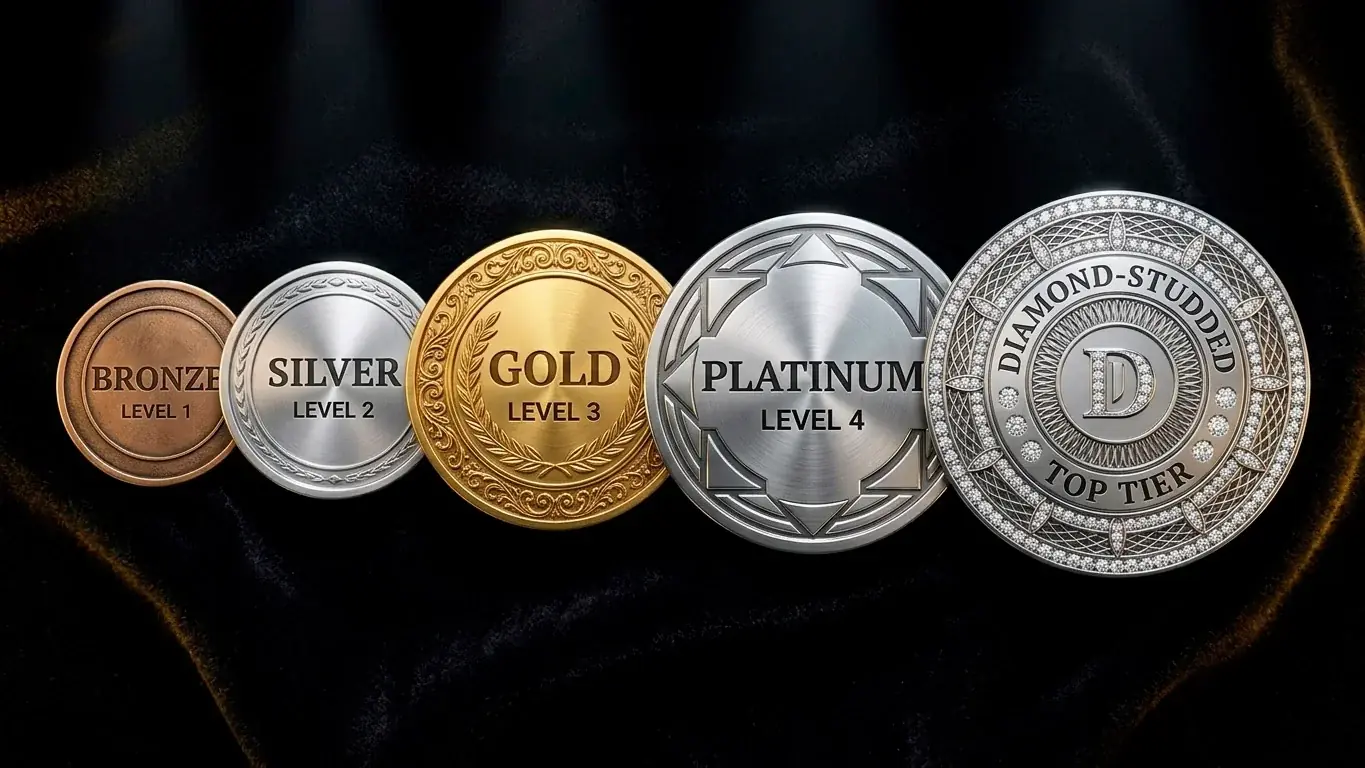
Rollino also features a “Rollino Shop” — a points-based store where accumulated loyalty points can be exchanged for bonuses, free spins, or other rewards. This mechanic adds a layer of player choice to the loyalty system: rather than receiving a fixed reward at each tier, you accumulate a currency and decide how to spend it. The practical value depends on the exchange rates offered and the quality of the items available in the shop at any given time.
A few points of critical assessment. First, VIP cashback sounds generous at 25%, but this percentage applies to net losses — meaning you only receive it when you are losing. It is a consolation mechanism, not a profit mechanism. A player who wins over a given period receives zero cashback for that period. Second, the wagering thresholds required to reach upper tiers are substantial. Most players will never leave the first or second tier, which means the headline cashback figures advertise a benefit accessible only to very high-volume depositors.
Third, cashback itself may come with wagering requirements before it can be withdrawn. If the 25% cashback you receive on losses must then be wagered 5x before withdrawal, the effective return is significantly lower than 25%. These conditions vary and should be verified directly in the platform’s VIP terms.
The complete VIP structure, including specific wagering thresholds for each tier and detailed comparisons with loyalty programmes at other Curacao-licensed casinos, is examined in the full VIP programme review.
Rollino in the 2026 iGaming Landscape
When I started in this industry, reviewing a casino meant checking the game list, noting the bonus, and verifying the licence was real. The market was smaller, simpler, and less regulated. The global online gambling market reached $130.2 billion in 2025 and is projected to hit $143.17 billion in 2026 — a 10% compound annual growth rate that shows no sign of decelerating. Within that expanding universe, where does a platform like Rollino fit?
The answer lies at the intersection of three trends that are reshaping the industry in 2026: the acceleration of crypto integration, the tightening of regulatory frameworks across jurisdictions, and the growing influence of artificial intelligence on both operations and player experience.
Crypto’s Growing Footprint
Rollino’s emphasis on cryptocurrency payments positions it within the fastest-growing payment segment in online gambling. As covered in the payments section, the crypto gambling market has reached a scale that puts it firmly in the mainstream, and crypto transactions now represent nearly a third of all online betting volume worldwide. Platforms that built their infrastructure around crypto from the start, rather than bolting it on as an afterthought, hold a genuine operational advantage in transaction speed, global reach, and appeal to a younger, digitally native player base.
Regulatory Divergence
The regulatory landscape in 2026 is defined by divergence. Regulated markets like the UK, Sweden, and the Netherlands impose increasingly strict requirements on operators — affordability checks, stake limits, advertising restrictions. Offshore jurisdictions like Curacao have reformed their frameworks but operate at a different level of oversight. This creates a two-tier market where players can choose between tightly regulated platforms with stronger consumer protections and offshore alternatives that offer fewer restrictions but less recourse if something goes wrong.
The editorial position in the SOFTSWISS 2026 iGaming Trends Report captures the direction of travel: “2026 won’t reward scale; it will reward precision. The winners in iGaming will be those who build architectures that explain every model decision, verify every payment in real time, and adapt every session to the player behind it.” That prescription applies to Rollino’s segment of the market as much as to any other.
AI and Personalisation
More than half of iGaming companies — 56% of those surveyed — now rank AI integration among their top three business priorities, with its importance rated at 8.41 out of 10, up from 8.15 the previous year. AI’s applications in the sector range from personalised game recommendations and dynamic bonus offers to real-time fraud detection and responsible gambling interventions. For players, the visible effect is a platform that increasingly adapts to individual behaviour — for better (more relevant game suggestions, earlier detection of harmful patterns) and for worse (more targeted retention tactics, optimised prompts to deposit).
Rollino operates in a market segment — Curacao-licensed, crypto-friendly, multi-brand — that is growing rapidly but faces increasing scrutiny. The platform’s long-term viability depends less on its current game catalogue or bonus structure and more on how effectively its operator adapts to evolving regulatory standards, integrates AI responsibly, and builds the kind of player trust that cannot be purchased with a welcome bonus.

The influencer-driven marketing model that dominated iGaming in previous years has lost ground, declining by ten percentage points since 2023. Brand reputation now outweighs bonus generosity as a factor in player acquisition — a shift that favours operators with consistent, transparent operations over those that compete primarily on promotional headline numbers. Where Rollino lands on that spectrum is something its track record over the next twelve to eighteen months will determine more conclusively than any single review can.
Who Rollino Casino Is Built For — and Who Should Look Elsewhere
Nine years of reviewing online casinos has taught me that no platform is universally right or universally wrong. Every operator serves a segment, and the honest job of a review is to identify which segment that is. After three weeks of testing, data analysis, and structural assessment, here is how I read Rollino.
Rollino is built for players who prioritise cryptocurrency flexibility, want access to a large and regularly expanding game catalogue, and are comfortable operating outside the regulatory frameworks of licensed markets like the UK. The platform’s crypto infrastructure is not a bolt-on — it is central to the product, reflected in the range of supported coins, the speed of crypto withdrawals, and the prominence of crypto-friendly promotions. If you are a player who already holds Bitcoin, Ethereum, or stablecoins and wants to use them for online gambling, Rollino’s technical setup accommodates that workflow efficiently.
The multi-deposit welcome package and five-tier VIP programme add structural incentives for sustained engagement. Whether those incentives deliver genuine value depends entirely on the terms attached — wagering requirements, game restrictions, cashback conditions — and I have flagged the key variables throughout this review. Players who take the time to understand these mechanics before depositing are in a materially different position from those who do not.
Rollino is a crypto-forward, Curacao-licensed platform with a large game catalogue and a tiered incentive structure. It suits players comfortable with offshore licensing and crypto payments. It is not a substitute for the consumer protections of a UKGC-licensed operator, and UK players should weigh that trade-off explicitly before engaging.

Who should look elsewhere? Players who require the dispute resolution mechanisms, self-exclusion networks, and affordability protections provided by the UK Gambling Commission. Players who are not comfortable with the recourse limitations of Curacao licensing. Players who have experienced gambling-related harm and rely on tools like GAMSTOP, which does not cover this platform. These are not marginal concerns — they are fundamental to the risk profile of using any offshore operator, and acknowledging them openly is part of what separates an independent analysis from a promotional piece.
Rollino is neither the best nor the worst in its category. It is a mid-market, multi-brand Curacao-licensed platform doing many things competently in a rapidly evolving industry. The question is not whether it works — it does — but whether it works for you, given your specific priorities, risk tolerance, and regulatory expectations.
Frequently Asked Questions About Rollino Casino
Is Rollino Casino legal and safe for UK players?
Rollino operates under a licence from the Curacao Gaming Authority (CGA), which is a legitimate regulatory body. It is not, however, licensed by the UK Gambling Commission. This means UK players can technically access the platform, but they do so without the consumer protections — dispute resolution, affordability checks, GAMSTOP self-exclusion — that UKGC-licensed operators provide. The platform uses 256-bit SSL encryption for data transmission, which is the industry standard for secure online transactions.
What bonuses does Rollino Casino offer new players?
Rollino’s welcome package spans four deposits, with a total match of up to 450% and a combined cap of 6,000 EUR, plus a batch of free spins. Each deposit carries its own match percentage and conditions. The value of any casino bonus is determined primarily by its wagering requirement — the number of times you must bet the bonus amount before withdrawing — rather than the headline percentage. The industry average wagering requirement is 35x, with operators ranging from 20x to 50x.
What payment methods and cryptocurrencies does Rollino support?
The platform accepts fiat payments via credit and debit cards (Visa, Mastercard), e-wallets, and bank transfers. Cryptocurrency options include Bitcoin, Ethereum, Litecoin, and Tether (USDT), among others. Crypto withdrawals generally process faster than fiat alternatives. Stablecoins like USDT offer the speed advantages of crypto without the price volatility of Bitcoin or Ethereum.
How do wagering requirements work at Rollino Casino?
Wagering requirements specify how many times the bonus amount must be bet before winnings become withdrawable. If you receive a 100 EUR bonus with a 35x wagering requirement, you must place 3,500 EUR in total bets before any withdrawal from bonus funds is permitted. Not all games contribute equally — slots typically count 100%, while table games may contribute at reduced rates or not at all. There is usually a time limit within which the requirement must be completed, after which the bonus and associated winnings expire.
Is there a Rollino Casino app for mobile devices?
Rollino does not offer a native app through the App Store or Google Play. The platform uses a mobile-optimised browser interface that adapts to your screen size. Games load directly via HTML5 in your mobile browser without additional software. This approach avoids app-store restrictions on gambling applications and ensures consistent access across all devices and operating systems.
Who operates Rollino Casino and what licence does it hold?
Rollino is operated by Altacore N.V., a company registered in Curacao in 2019 that manages more than seventeen online casino brands. The platform holds a licence from the Curacao Gaming Authority, issued under the reformed direct-licensing framework that replaced the old master-licence system in December 2024. This licence confirms the operator has met Curacao’s standards for financial reserves, anti-money laundering compliance, game fairness, and responsible gambling provisions.
How is the VIP programme at Rollino Casino structured?
Rollino’s VIP programme uses a five-tier system based on cumulative wagering activity. Benefits escalate with each tier and include increasing cashback rates (up to 25% at the highest level), faster withdrawal processing, access to a dedicated account manager, and personalised promotional offers. The platform also features a loyalty points shop where accumulated points can be exchanged for bonuses and free spins. Cashback is calculated on net losses, meaning it only applies during losing periods, and may carry its own wagering requirements before withdrawal.
Prepared by the Rollino Casino editorial staff.